
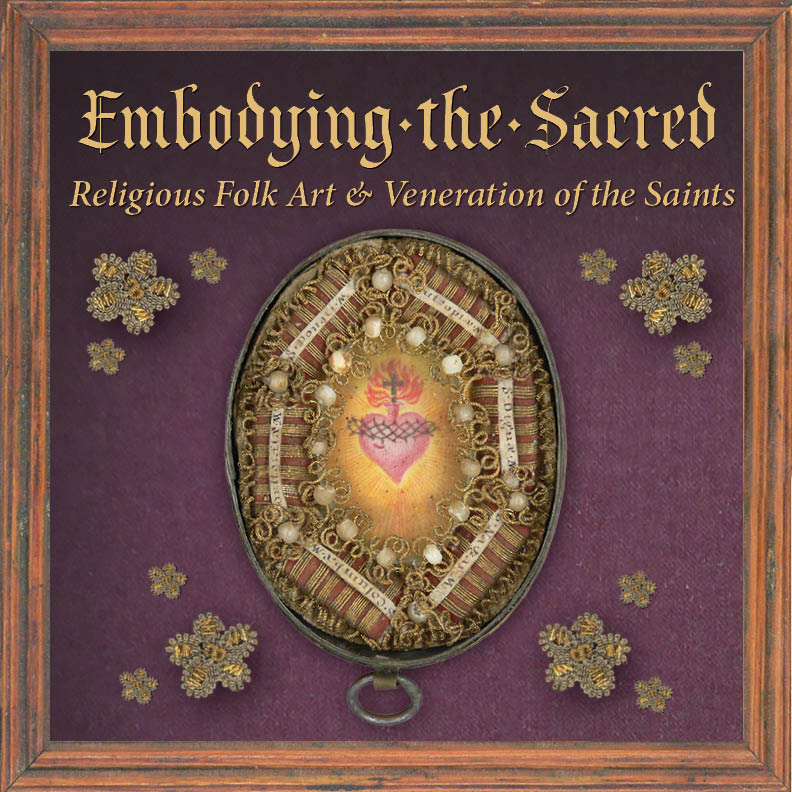
Embodying the Sacred
Religious Folk Art & Veneration of the Saints
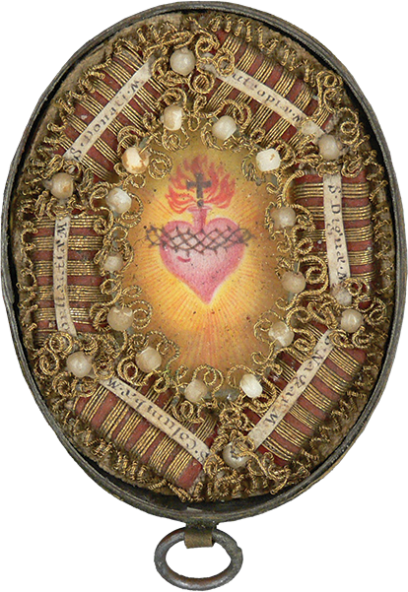
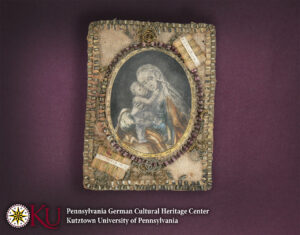
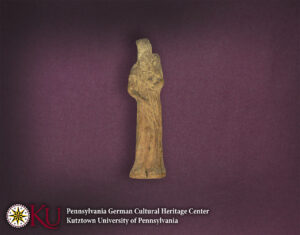
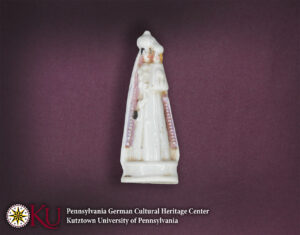
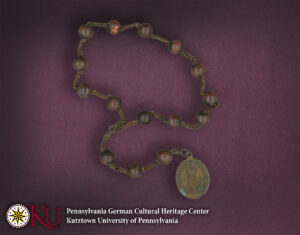
The veneration of the saints is a central aspect of Roman Catholic tradition dating back to the early Middle Ages and the establishment of monasteries across Europe. Relics—small fragments of the bones of saints or objects owned by the saints—served as physical ties to holy figures and their sacred narratives, and played a significant role in consecrating cathedrals, churches, and shrines, as well as in personal devotions. Embodying extraordinary virtue on a human scale, stories of the Saints and their deeds have historically inspired pilgrimages, devotional practices, and healing traditions in communities throughout the world. These religious and cultural expressions continue to flourish in the present day in official settings among Roman Catholics as well as in folk-cultural traditions in diverse religious and cultural communities. For Pennsylvania Germans, among whom Roman Catholics historically comprised less than 1%, echoes of the veneration of the saints influenced folk-cultural expressions outside of the official context of church, including agricultural calendars, healing traditions, and protective rituals practiced in everyday life. This exhibition features a collection of European reliquaries and images of the saints collected by Dr. Don Yoder, whose research in folk religion identified parallels between Roman Catholic practices and Pennsylvania folklife.
This online exhibition of Embodying the Sacred was guest curated and developed by Julia Sweeney (’26).
Why the Tongue?
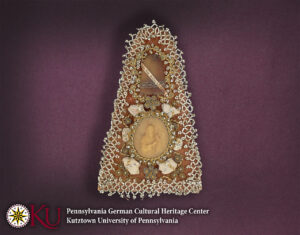
The tongue attached to the pink velvet backing above the first-class relics of the martyrs may appear at first glance like a real petrified human tongue. Upon closer inspection, the label running diagonally across it identifies it in Latin as wax (with the abbreviation de. Cer. , Latin for de cera “of wax”). The abbreviation following de. Cer. tells us that the wax contains some S. Terra. (Latin Sancte Terra, “sacred earth”), which signifies that dirt or dust from the tomb of St. John was mixed in with the wax. This makes the wax tongue a third-class relic. The relics of the martyrs surrounding the tongue are inscribed (clockwise): S. Benigni M. ; S. Donati (M.) ; S. Luciani M.; S. Maximi M. ; (S.) Boni M. ; S. Aurelii M. (St. Benignus, St. Donatus, St. Lucian, St. Maximilian, St. Boniface, St. Aurelius).
What is a Theca?
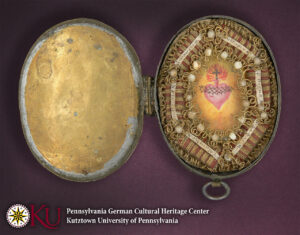
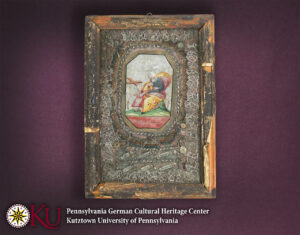
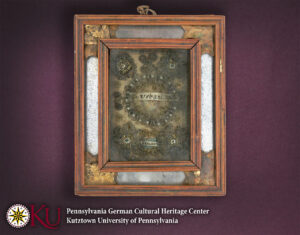
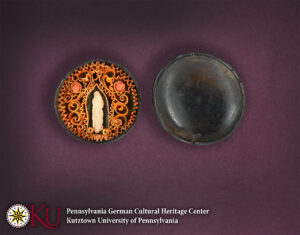
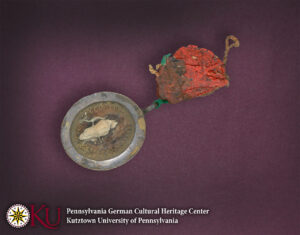
A theca is a sealed, round metal medallion with a viewing glass, and a hanging loop called a bail. A theca is traditionally made up of two interlocking metal plates forming a case that protects the relic inside from being disturbed. The two metal plates also have two holes in their sides which line up exactly, and a piece of string would be laced through these holes and held in place with an official wax seal on the back. This is done to keep the reliquary closed and as a security measure to preserve the relic’s authenticity, as one would have to cut the string and disturb the wax seal to get to the relic inside.
What is a Scapular?
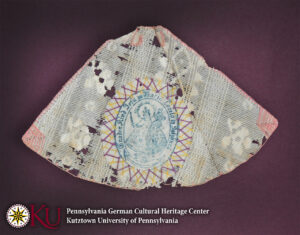
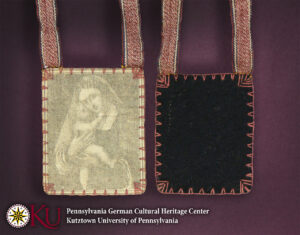
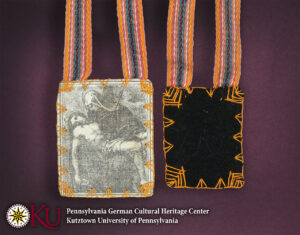
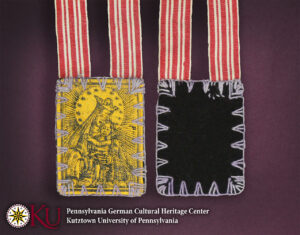
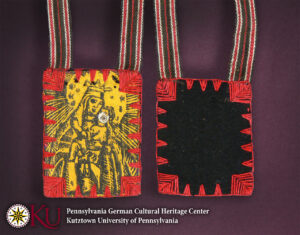
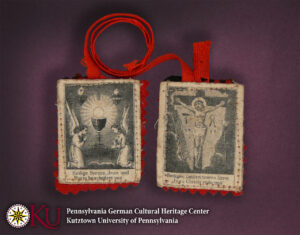
A scapular is a devotional item made of wool and worn like a necklace, with two parts worn over the shoulders: One wool patch on the wearer’s chest, and the other patch on the wearer’s back. The two sides of a scapular are often printed with images of the Blessed Virgin Mary, the Immaculate Heart of Mary, the Crucifixion, or images of saints. A scapular is often brown wool, but other colors exist and signify other particular devotions to Mary or Christ. Catholics wear scapulars as an outward expression of devotion and a commitment to Our Lady of Mt. Carmel who, according to tradition, promises to protect the wearer from eternal damnation. These colorful, vibrant scapulars part of the Don Yoder Collection were likely made in the mid-19th century, and their pristine condition suggests that they were not regularly worn by anyone.
Holy cards
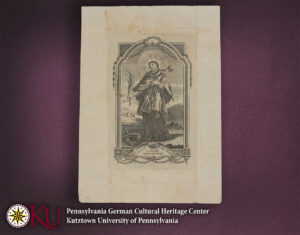
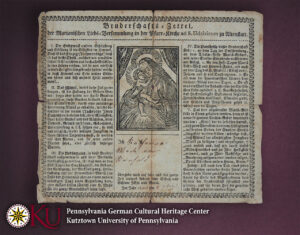
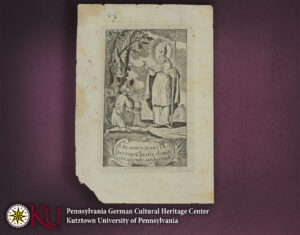
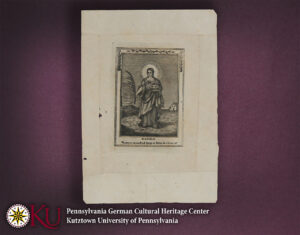
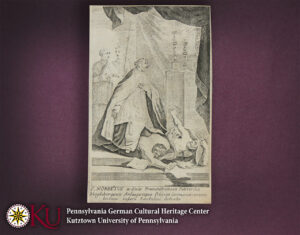
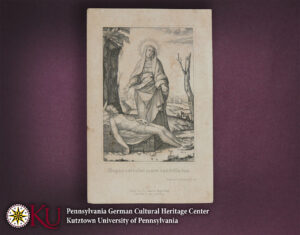
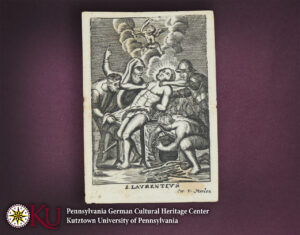
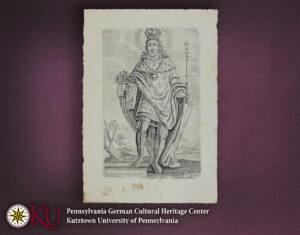
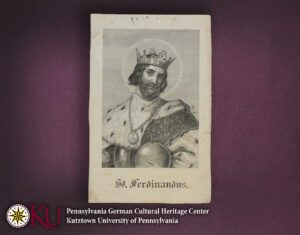
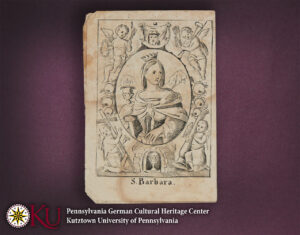
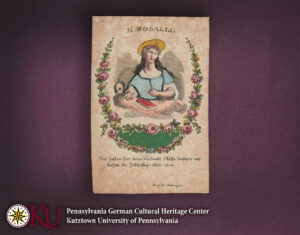
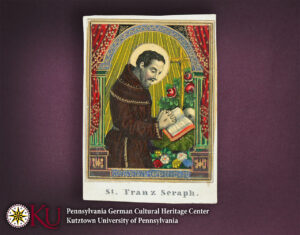
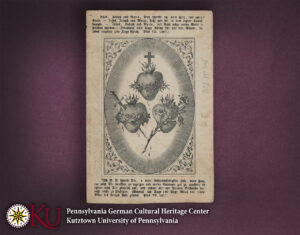
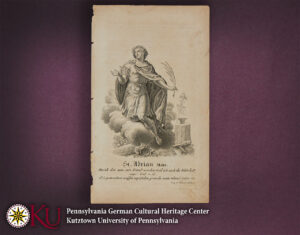
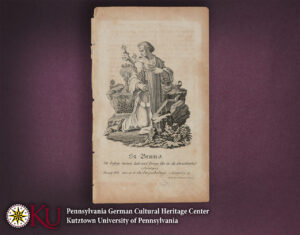
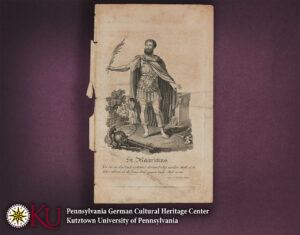
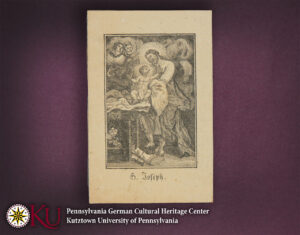
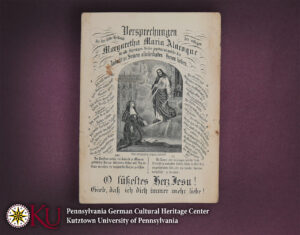
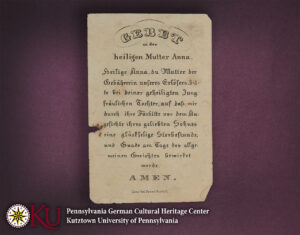
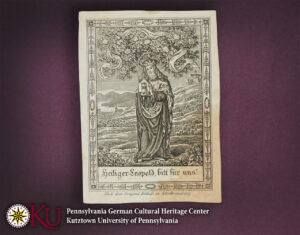
Dr. Don Yoder collected these holy cards over the course of his travels throughout Europe, and others were sent to him by colleagues and friends from around the world. The entire holy card collection spans the years of 1745-2000, and contains a plethora of Christian and Catholic ephemera, religious tracts, funeral cards, and prayers in English, German, French, Italian, Latin, Polish, Czech, and Portuguese.
The selection of holy cards in this exhibition enriches both the religious and artistic context of the reliquaries around them. The cards on display here were created approximately between the years of 1750 and 1850. The veneration of the saints is a cornerstone of Catholic faith and practice, and many cultures with deep roots in Catholicism have carried the saints over into their folk-cultural practices. Through their vivid iconography and artistic beauty, these prints offer another tangible connection to the saints.
Enjoy an interview with the curator Julia Sweeney (’26) in a video by Kimberly Twigg (’26).